
Rendering Methods
Section 9: Rendering Methods
Section titled “Section 9: Rendering Methods”9.1 The Four Rendering Strategies
Section titled “9.1 The Four Rendering Strategies”Next.js offers four main rendering strategies. Choosing the right one impacts performance, SEO, and user experience significantly.
| Strategy | Acronym | When HTML is Generated |
|---|---|---|
| Static Site Generation | SSG | At build time |
| Server-Side Rendering | SSR | At request time |
| Incremental Static Regeneration | ISR | Build time + periodic refresh |
| Client-Side Rendering | CSR | In the browser |
Rendering Strategies Comparison
Section titled “Rendering Strategies Comparison”flowchart TB subgraph Strategies["4 Rendering Strategies"] SSG["🏗️ SSGStatic Site GenerationHTML built at deploy timeBlogs, Docs, Marketing"]
SSR["🔄 SSRServer-Side RenderingHTML built per requestDashboards, Auth, User-specific"]
ISR["⏳ ISRIncremental Static Regen.Static + periodic refreshE-com, News, Pricing"]
CSR["🖥️ CSRClient-Side RenderingRendered in browserReal-time apps, Charts"] end
SSG -->|"⚡ Fastest CDN"| HTML1["Static HTML"] SSR -->|"🐢 Always fresh"| HTML2["Dynamic HTML"] ISR -->|"⚡ Fast + Fresh"| HTML3["Cached + Revalidated"] CSR -->|"🐌 Slow initial"| HTML4["JS + Empty Shell"]
style SSG fill:#059669,color:#fff style SSR fill:#4f46e5,color:#fff style ISR fill:#f59e0b,color:#000 style CSR fill:#dc2626,color:#fff style HTML1 fill:#9333ea,color:#fff style HTML2 fill:#9333ea,color:#fff style HTML3 fill:#9333ea,color:#fff style HTML4 fill:#9333ea,color:#fff style Strategies fill:#1e1b4b,color:#e0e7ff9.2 Static Site Generation (SSG)
Section titled “9.2 Static Site Generation (SSG)”SSG pre-renders pages at build time. All pages become static HTML files — blazing fast.
// Tell Next.js all possible blog post slugs at build timeexport async function generateStaticParams() {  const posts = await fetch("https://api.example.com/posts").then((r) =>    r.json()  );
  return posts.map((post: { slug: string }) => ({    slug: post.slug,  }));}
// This page is statically generated for each slugasync function BlogPost({ params }: { params: { slug: string } }) {  const post = await fetch(`https://api.example.com/posts/${params.slug}`, {    cache: "force-cache", // Cache this forever (SSG behavior)  }).then((r) => r.json());
  return (    <article>      <h1>{post.title}</h1>      <div dangerouslySetInnerHTML={{ __html: post.content }} />    </article>  );}
export default BlogPost;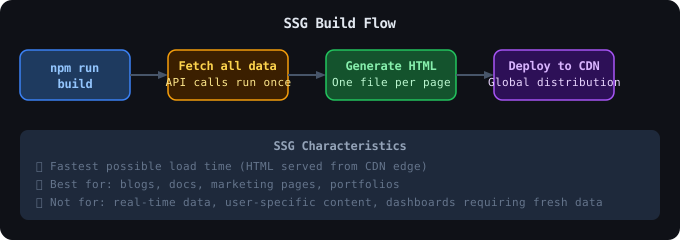
9.3 Server-Side Rendering (SSR)
Section titled “9.3 Server-Side Rendering (SSR)”SSR generates HTML on every request. Always fresh, always current.
// Force dynamic rendering (SSR behavior)export const dynamic = "force-dynamic";
async function DashboardPage() {  // This runs on EVERY request — always fresh data  const userData = await fetch("https://api.example.com/user/me", {    cache: "no-store",    headers: {      Authorization: `Bearer ${process.env.API_TOKEN}`,    },  }).then((r) => r.json());
  return (    <div>      <h1>Welcome back, {userData.name}</h1>      <p>Last login: {userData.lastLogin}</p>    </div>  );}
export default DashboardPage;
9.4 Incremental Static Regeneration (ISR)
Section titled “9.4 Incremental Static Regeneration (ISR)”ISR is the best of both worlds — pages are static but automatically refreshed on a schedule.
// ISR: regenerate this page every 10 minutesexport const revalidate = 600; // seconds
async function ProductPage({ params }: { params: { id: string } }) {  const product = await fetch(`https://api.example.com/products/${params.id}`)    .then((r) => r.json());
  return (    <div>      <h1>{product.name}</h1>      <p>Price: ₹{product.price}</p>      {/* Last updated shown to user */}      <small>Updated: {new Date().toLocaleString()}</small>    </div>  );}
export default ProductPage;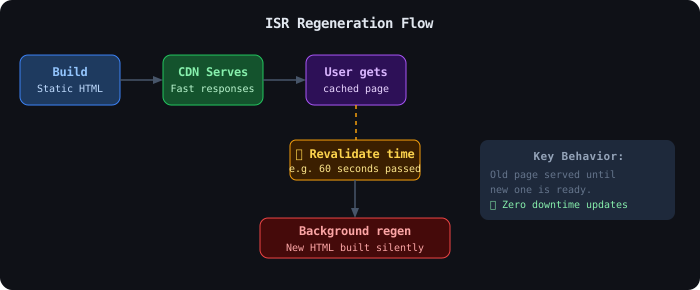
9.5 Client-Side Rendering (CSR)
Section titled “9.5 Client-Side Rendering (CSR)”CSR renders entirely in the browser. The server sends minimal HTML; React builds the UI.
"use client";
import { useEffect, useState } from "react";
interface DataPoint {  time: string;  value: number;}
// Pure CSR — browser fetches and renders all dataexport function LiveChart({ dataUrl }: { dataUrl: string }) {  const [data, setData] = useState<DataPoint[]>([]);  const [loading, setLoading] = useState(true);
  useEffect(() => {    const fetchData = async () => {      const res = await fetch(dataUrl);      const json = await res.json();      setData(json);      setLoading(false);    };
    fetchData();
    // Poll every 5 seconds for live updates    const interval = setInterval(fetchData, 5000);    return () => clearInterval(interval);  }, [dataUrl]);
  if (loading) return <div className="animate-pulse h-40 bg-gray-200 rounded" />;
  return (    <div>      {/* Render chart with data */}      {data.map((point, i) => (        <div key={i}>{point.time}: {point.value}</div>      ))}    </div>  );}
9.6 Rendering Methods Comparison
Section titled “9.6 Rendering Methods Comparison”SSR vs SSG vs ISR vs CSR
Section titled “SSR vs SSG vs ISR vs CSR”| Feature | SSR | SSG | ISR | CSR |
|---|---|---|---|---|
| HTML generated | Per request | At build | Build + refresh | In browser |
| Performance | Medium | 🏆 Fastest | Fast | Slow initial |
| SEO | ✅ Excellent | ✅ Excellent | ✅ Excellent | ❌ Poor |
| Data freshness | 🏆 Always fresh | Stale | Periodic | Controlled |
| Server load | High | None (CDN) | Low | None |
| Personalized | ✅ Yes | ❌ No | ❌ No | ✅ Yes |
| Build time | Fast | Slow (all pages) | Fast | Fast |
| Use cases | Dashboards, auth | Blogs, docs | E-commerce | Real-time apps |
SEO Comparison
Section titled “SEO Comparison”| Method | SEO Score | Reason |
|---|---|---|
| SSG | ⭐⭐⭐⭐⭐ | Static HTML on CDN, fastest crawl |
| ISR | ⭐⭐⭐⭐⭐ | Same as SSG + auto-refresh |
| SSR | ⭐⭐⭐⭐ | HTML rendered per request, great for bots |
| CSR | ⭐⭐ | Bots may not run JavaScript |
9.7 Hydration Deep Dive
Section titled “9.7 Hydration Deep Dive”Partial Hydration — Next.js only hydrates Client Components, not Server Components. This makes apps faster.
Streaming Rendering — With Suspense, parts of the page stream to the browser as they’re ready. No need to wait for all data.
// This page streams content progressivelyimport { Suspense } from "react";
export default function Page() {  return (    <>      {/* Immediately sent — no waiting */}      <Header />
      {/* Streams when ready */}      <Suspense fallback={<Skeleton />}>        <SlowDataComponent />      </Suspense>
      {/* Also streams independently */}      <Suspense fallback={<Skeleton />}>        <AnotherSlowComponent />      </Suspense>    </>  );}
9.8 Edge Rendering
Section titled “9.8 Edge Rendering”Next.js can run pages at CDN edge locations for ultra-low latency worldwide.
export const runtime = "edge"; // Run at CDN edge
export async function GET(request: Request) {  // Runs at the nearest edge location to the user  return new Response("Hello from the edge!", {    headers: { "Content-Type": "text/plain" },  });}
9.9 Choosing the Right Rendering Method
Section titled “9.9 Choosing the Right Rendering Method”Is content the same for all users? ├── YES → Does it change frequently? │ ├── NO → SSG (blogs, docs, marketing) │ └── YES → ISR (news, product pages, pricing) └── NO → Is SEO important? ├── YES → SSR (user-specific but SEO-critical) └── NO → CSR (dashboards, real-time, auth-only)9.10 Interview Questions — Rendering Methods
Section titled “9.10 Interview Questions — Rendering Methods”- What is the difference between SSG and SSR?
- When would you choose ISR over SSG?
- What does
export const dynamic = "force-dynamic"do? - What is
generateStaticParamsand when is it used? - What is partial hydration? How does it help performance?
- What is streaming rendering in Next.js?
- Can you mix SSG and SSR on the same site?
- What happens when a user requests a page that hasn’t been statically generated yet (ISR)?
- What is edge rendering? What are its benefits?
- How does CSR affect SEO? How do you mitigate this?