
State Management
Section 14: State Management
Section titled “Section 14: State Management”14.1 What Is State Management?
Section titled “14.1 What Is State Management?”State is any data that can change over time in your application. Think of it as the app’s “memory.”
Examples of State:─────────────────────────────────────────────✅ Is the user logged in? → Auth state✅ Items in shopping cart → Cart state✅ Current theme (dark/light) → UI state✅ List of fetched blog posts → Server state✅ Form input values → Form state✅ Active tab in navigation → Navigation stateLocal vs Global State
Section titled “Local vs Global State”Local State: Global State:───────────────────────────────────────────────Lives in one component Shared across many componentsManaged with useState Managed with Context/Redux/ZustandDies when component unmounts Persists across navigationExample: dropdown open/closed Example: user authentication14.2 State Flow Diagram
Section titled “14.2 State Flow Diagram”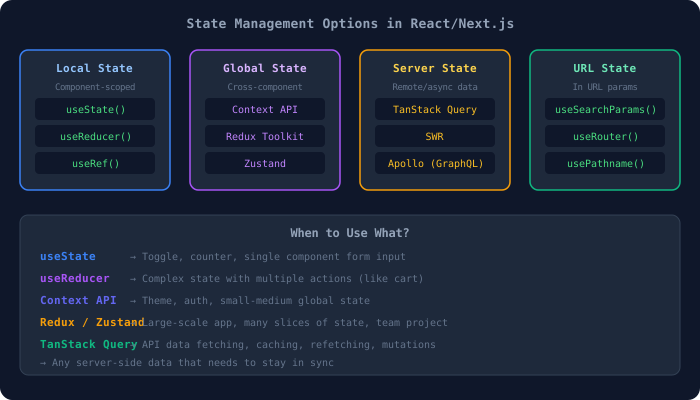
14.3 useState — The Foundation
Section titled “14.3 useState — The Foundation”"use client";
import { useState } from "react";
// Basic counterexport function Counter() { const [count, setCount] = useState<number>(0);
return ( <div> <p>Count: {count}</p> <button onClick={() => setCount((prev) => prev + 1)}>+</button> <button onClick={() => setCount((prev) => prev - 1)}>-</button> <button onClick={() => setCount(0)}>Reset</button> </div> );}
// Object stateinterface User { name: string; email: string; age: number;}
export function UserForm() { const [user, setUser] = useState<User>({ name: "", email: "", age: 0, });
// Update a single field without losing others const updateField = (field: keyof User, value: string | number) => { setUser((prev) => ({ ...prev, [field]: value })); };
return ( <form> <input value={user.name} onChange={(e) => updateField("name", e.target.value)} /> {/* Other fields */} </form> );}14.4 useReducer — Complex State Logic
Section titled “14.4 useReducer — Complex State Logic”"use client";
import { useReducer } from "react";
// Typesinterface CartItem { id: string; name: string; price: number; quantity: number;}
interface CartState { items: CartItem[]; total: number;}
// Actions (discriminated union for type safety)type CartAction = | { type: "ADD_ITEM"; payload: CartItem } | { type: "REMOVE_ITEM"; payload: { id: string } } | { type: "UPDATE_QUANTITY"; payload: { id: string; quantity: number } } | { type: "CLEAR_CART" };
// Reducer — pure function: (state, action) => newStatefunction cartReducer(state: CartState, action: CartAction): CartState { switch (action.type) { case "ADD_ITEM": { const existing = state.items.find((i) => i.id === action.payload.id);
if (existing) { // Increase quantity if already in cart const items = state.items.map((i) => i.id === action.payload.id ? { ...i, quantity: i.quantity + 1 } : i ); return { items, total: calculateTotal(items) }; }
const items = [...state.items, { ...action.payload, quantity: 1 }]; return { items, total: calculateTotal(items) }; }
case "REMOVE_ITEM": { const items = state.items.filter((i) => i.id !== action.payload.id); return { items, total: calculateTotal(items) }; }
case "UPDATE_QUANTITY": { const items = state.items.map((i) => i.id === action.payload.id ? { ...i, quantity: action.payload.quantity } : i ); return { items, total: calculateTotal(items) }; }
case "CLEAR_CART": return { items: [], total: 0 };
default: return state; }}
function calculateTotal(items: CartItem[]): number { return items.reduce((sum, item) => sum + item.price * item.quantity, 0);}
// Usage in componentexport function ShoppingCart() { const [cart, dispatch] = useReducer(cartReducer, { items: [], total: 0 });
const addItem = (item: CartItem) => dispatch({ type: "ADD_ITEM", payload: item }); const removeItem = (id: string) => dispatch({ type: "REMOVE_ITEM", payload: { id } });
return ( <div> <p>Items: {cart.items.length} | Total: ${cart.total.toFixed(2)}</p> {cart.items.map((item) => ( <div key={item.id}> <span>{item.name} × {item.quantity}</span> <button onClick={() => removeItem(item.id)}>Remove</button> </div> ))} </div> );}14.5 Context API — Sharing State Without Prop Drilling
Section titled “14.5 Context API — Sharing State Without Prop Drilling”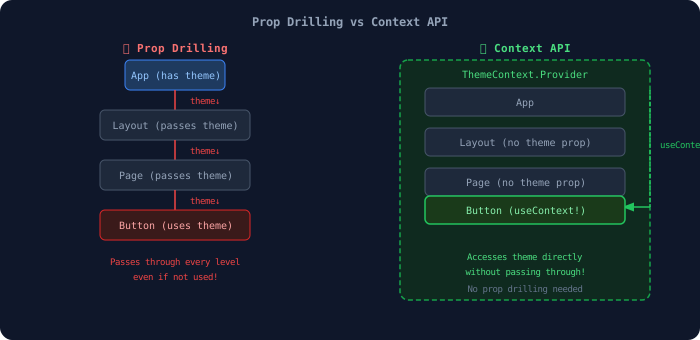
Implementing Context API
Section titled “Implementing Context API”"use client";
import { createContext, useContext, useState, ReactNode } from "react";
type Theme = "light" | "dark";
interface ThemeContextType { theme: Theme; toggleTheme: () => void; isDark: boolean;}
// Create context with default valueconst ThemeContext = createContext<ThemeContextType | undefined>(undefined);
// Provider componentexport function ThemeProvider({ children }: { children: ReactNode }) { const [theme, setTheme] = useState<Theme>("light");
const toggleTheme = () => { setTheme((prev) => (prev === "light" ? "dark" : "light")); };
const value: ThemeContextType = { theme, toggleTheme, isDark: theme === "dark", };
return ( <ThemeContext.Provider value={value}> {children} </ThemeContext.Provider> );}
// Custom hook — much cleaner than useContext(ThemeContext) everywhereexport function useTheme(): ThemeContextType { const context = useContext(ThemeContext); if (!context) { throw new Error("useTheme must be used within ThemeProvider"); } return context;}// app/layout.tsx — wrap the appimport { ThemeProvider } from "@/context/ThemeContext";
export default function RootLayout({ children }: { children: React.ReactNode }) { return ( <html lang="en"> <body> <ThemeProvider> {children} </ThemeProvider> </body> </html> );}// Any deeply nested component"use client";import { useTheme } from "@/context/ThemeContext";
export function ThemeToggle() { const { theme, toggleTheme, isDark } = useTheme(); // Direct access!
return ( <button onClick={toggleTheme} className={isDark ? "bg-gray-800 text-white" : "bg-white text-gray-800"} > {isDark ? "🌞 Light Mode" : "🌙 Dark Mode"} </button> );}14.6 Redux Toolkit
Section titled “14.6 Redux Toolkit”Redux Architecture
Section titled “Redux Architecture”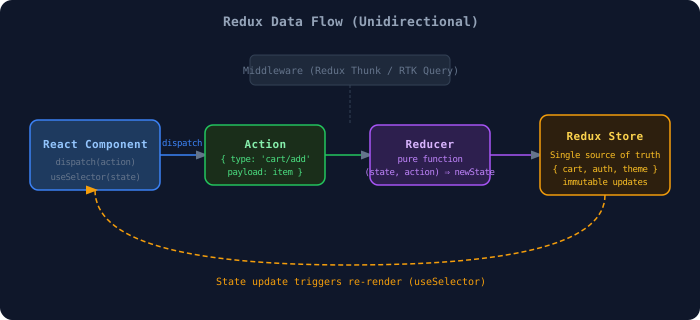
Redux Toolkit Setup
Section titled “Redux Toolkit Setup”npm install @reduxjs/toolkit react-reduximport { createSlice, PayloadAction } from "@reduxjs/toolkit";
interface CartItem { id: string; name: string; price: number; quantity: number; image: string;}
interface CartState { items: CartItem[]; isOpen: boolean;}
const initialState: CartState = { items: [], isOpen: false,};
export const cartSlice = createSlice({ name: "cart", // Action type prefix initialState, reducers: { // Redux Toolkit uses Immer — you can "mutate" state directly! addItem: (state, action: PayloadAction<CartItem>) => { const existing = state.items.find((i) => i.id === action.payload.id); if (existing) { existing.quantity += 1; // Immer handles immutability } else { state.items.push({ ...action.payload, quantity: 1 }); } },
removeItem: (state, action: PayloadAction<string>) => { state.items = state.items.filter((i) => i.id !== action.payload); },
updateQuantity: ( state, action: PayloadAction<{ id: string; quantity: number }> ) => { const item = state.items.find((i) => i.id === action.payload.id); if (item) item.quantity = action.payload.quantity; },
clearCart: (state) => { state.items = []; },
toggleCart: (state) => { state.isOpen = !state.isOpen; }, },});
// Auto-generated action creatorsexport const { addItem, removeItem, updateQuantity, clearCart, toggleCart } = cartSlice.actions;
// Selectorsexport const selectCartItems = (state: { cart: CartState }) => state.cart.items;export const selectCartTotal = (state: { cart: CartState }) => state.cart.items.reduce((sum, item) => sum + item.price * item.quantity, 0);export const selectCartCount = (state: { cart: CartState }) => state.cart.items.reduce((sum, item) => sum + item.quantity, 0);
export default cartSlice.reducer;import { configureStore } from "@reduxjs/toolkit";import { TypedUseSelectorHook, useDispatch, useSelector } from "react-redux";import cartReducer from "./slices/cartSlice";import authReducer from "./slices/authSlice";
export const store = configureStore({ reducer: { cart: cartReducer, auth: authReducer, // Add more slices here },});
// Infer types from storeexport type RootState = ReturnType<typeof store.getState>;export type AppDispatch = typeof store.dispatch;
// Typed hooks (use these instead of plain useSelector/useDispatch)export const useAppDispatch = () => useDispatch<AppDispatch>();export const useAppSelector: TypedUseSelectorHook<RootState> = useSelector;"use client";import { Provider } from "react-redux";import { store } from "@/store";
export function ReduxProvider({ children }: { children: React.ReactNode }) { return <Provider store={store}>{children}</Provider>;}// Using Redux in a component"use client";import { useAppDispatch, useAppSelector } from "@/store";import { addItem, selectCartCount } from "@/store/slices/cartSlice";
export function ProductCard({ product }: { product: Product }) { const dispatch = useAppDispatch(); const cartCount = useAppSelector(selectCartCount);
return ( <div> <h3>{product.name}</h3> <p>${product.price}</p> <button onClick={() => dispatch(addItem(product))}> Add to Cart ({cartCount}) </button> </div> );}14.7 Zustand — Lightweight Alternative
Section titled “14.7 Zustand — Lightweight Alternative”npm install zustandimport { create } from "zustand";import { devtools, persist } from "zustand/middleware";
interface CartItem { id: string; name: string; price: number; quantity: number;}
interface CartStore { items: CartItem[]; addItem: (item: Omit<CartItem, "quantity">) => void; removeItem: (id: string) => void; clearCart: () => void; total: () => number;}
export const useCartStore = create<CartStore>()( devtools( // Redux DevTools support persist( // Persist to localStorage (set, get) => ({ items: [],
addItem: (item) => { set((state) => { const existing = state.items.find((i) => i.id === item.id); if (existing) { return { items: state.items.map((i) => i.id === item.id ? { ...i, quantity: i.quantity + 1 } : i ), }; } return { items: [...state.items, { ...item, quantity: 1 }] }; }); },
removeItem: (id) => set((state) => ({ items: state.items.filter((i) => i.id !== id), })),
clearCart: () => set({ items: [] }),
// Derived state as a function total: () => get().items.reduce((sum, i) => sum + i.price * i.quantity, 0), }), { name: "cart-storage" } // localStorage key ) ));
// Usage — no Provider needed!export function CartIcon() { const items = useCartStore((state) => state.items); const count = items.reduce((sum, i) => sum + i.quantity, 0); return <span>🛒 {count}</span>;}14.8 TanStack Query (React Query)
Section titled “14.8 TanStack Query (React Query)”For server state — data fetching, caching, synchronization.
npm install @tanstack/react-query @tanstack/react-query-devtools"use client";import { QueryClient, QueryClientProvider } from "@tanstack/react-query";import { ReactQueryDevtools } from "@tanstack/react-query-devtools";import { useState } from "react";
export function QueryProvider({ children }: { children: React.ReactNode }) { const [queryClient] = useState( () => new QueryClient({ defaultOptions: { queries: { staleTime: 60 * 1000, // Data fresh for 1 minute retry: 2, // Retry failed queries twice }, }, }) );
return ( <QueryClientProvider client={queryClient}> {children} <ReactQueryDevtools initialIsOpen={false} /> </QueryClientProvider> );}import { useQuery, useMutation, useQueryClient } from "@tanstack/react-query";
// API functionsconst fetchPosts = async (page: number) => { const res = await fetch(`/api/posts?page=${page}`); if (!res.ok) throw new Error("Failed to fetch posts"); return res.json();};
const createPost = async (data: { title: string; content: string }) => { const res = await fetch("/api/posts", { method: "POST", headers: { "Content-Type": "application/json" }, body: JSON.stringify(data), }); if (!res.ok) throw new Error("Failed to create post"); return res.json();};
// Custom query hookexport function usePosts(page: number) { return useQuery({ queryKey: ["posts", page], // Cache key — unique per page queryFn: () => fetchPosts(page), placeholderData: (prev) => prev, // Keep old data while fetching new });}
// Custom mutation hookexport function useCreatePost() { const queryClient = useQueryClient();
return useMutation({ mutationFn: createPost, onSuccess: () => { // Invalidate and refetch posts after creating queryClient.invalidateQueries({ queryKey: ["posts"] }); }, onError: (error) => { console.error("Failed to create post:", error); }, });}
// In a componentexport function PostsList() { const [page, setPage] = useState(1); const { data, isLoading, isError, error } = usePosts(page); const createPost = useCreatePost();
if (isLoading) return <div>Loading...</div>; if (isError) return <div>Error: {error.message}</div>;
return ( <div> {data.posts.map((post: any) => ( <article key={post.id}>{post.title}</article> ))} <button onClick={() => setPage((p) => p - 1)} disabled={page === 1}> Previous </button> <button onClick={() => setPage((p) => p + 1)}>Next</button> </div> );}14.9 Comparison Tables
Section titled “14.9 Comparison Tables”Context API vs Redux vs Zustand
Section titled “Context API vs Redux vs Zustand”| Feature | Context API | Redux Toolkit | Zustand |
|---|---|---|---|
| Bundle size | 0 (built-in) | ~11KB | ~1KB |
| Boilerplate | Medium | Low (RTK) | Very Low |
| DevTools | No | Yes (Redux DevTools) | Yes |
| Persistence | Manual | Need middleware | Built-in |
| Performance | Re-renders context consumers | Optimized selectors | Selector-based |
| Learning curve | Low | Medium | Very Low |
| Best for | Small apps, theme/auth | Large teams, complex state | Medium apps, simple API |
| TypeScript | Good | Excellent | Good |
| Async actions | Manual | createAsyncThunk / RTK Query | Simple with set |
React Query vs Redux for Server State
Section titled “React Query vs Redux for Server State”| Aspect | TanStack Query | Redux + Thunks |
|---|---|---|
| Caching | Automatic, time-based | Manual |
| Refetching | On focus, interval, mount | Manual |
| Loading states | Built-in | Manual |
| Deduplication | Automatic | Manual |
| Optimistic updates | Built-in helpers | Manual |
| Code volume | ~5 lines | ~30+ lines |
| Background updates | Yes | Manual |
| Best for | API/server data | Client-only state |
14.10 Performance Optimization
Section titled “14.10 Performance Optimization”// ❌ BAD: Context causes ALL consumers to re-renderconst AppContext = createContext({ user, theme, cart, notifications });// Any change re-renders ALL consumers!
// ✅ GOOD: Split contexts by update frequencyconst AuthContext = createContext({ user }); // Changes rarelyconst ThemeContext = createContext({ theme }); // Changes sometimesconst CartContext = createContext({ cart }); // Changes often
// ✅ GOOD: Memoize context valueconst value = useMemo(() => ({ user, login, logout }), [user]);return <AuthContext.Provider value={value}>{children}</AuthContext.Provider>;
// ✅ GOOD: Use selectors to prevent unnecessary re-renders with Redux// BAD - re-renders whenever ANY state changesconst state = useAppSelector((s) => s);
// GOOD - only re-renders when cart items changeconst items = useAppSelector((s) => s.cart.items);const total = useAppSelector(selectCartTotal); // Memoized selector
// ✅ GOOD: Memoized selectors with createSelector (Reselect)import { createSelector } from "@reduxjs/toolkit";const selectExpensiveItems = createSelector( (state: RootState) => state.cart.items, (items) => items.filter((i) => i.price > 100) // Only recomputes when items change);14.11 Best Practices
Section titled “14.11 Best Practices”| # | Practice | Why |
|---|---|---|
| 1 | Co-locate state with components that use it | Simpler, faster |
| 2 | Use Context for infrequently-changing global state | Avoid unnecessary re-renders |
| 3 | Use TanStack Query for all server/async data | Built-in caching, deduplication |
| 4 | Use Zustand or Redux for complex client state | Better DevTools, time-travel |
| 5 | Create typed custom hooks (useCart, useAuth) | Cleaner API, easier refactoring |
| 6 | Use memoized selectors | Performance |
| 7 | Normalize complex state shapes | Avoid nested updates |
| 8 | Don’t put everything in global state | Local state is fine for UI |
14.12 Common Mistakes
Section titled “14.12 Common Mistakes”// ❌ MISTAKE 1: Putting everything in global state// Form input state, modal open/close, tooltip visible — these are LOCAL!
// ❌ MISTAKE 2: Not using selectorsconst everything = useAppSelector((s) => s); // Subscribes to everything!
// ❌ MISTAKE 3: Creating Context without a custom hookconst value = useContext(ThemeContext); // No error if used outside Provider!// ✅ Create a custom hook that throws a clear error
// ❌ MISTAKE 4: Not memoizing context value<MyContext.Provider value={{ user, login }}>// Creates new object on every render — all consumers re-render!// ✅ value={useMemo(() => ({ user, login }), [user])}
// ❌ MISTAKE 5: Using Redux for server state// Don't fetch API data and store it in Redux — use TanStack Query!14.13 Interview Questions — State Management
Section titled “14.13 Interview Questions — State Management”| Level | Question | Key Points |
|---|---|---|
| 🟢 Beginner | What is the difference between props and state? | Props passed down, state internal |
| 🟢 Beginner | When would you use useReducer over useState? | Complex state with many actions |
| 🟡 Intermediate | What is prop drilling and how do you solve it? | Context, state management libs |
| 🟡 Intermediate | What problem does Redux solve? | Predictable, centralized state |
| 🟡 Intermediate | Context API vs Redux — when to use which? | Size, DevTools, performance needs |
| 🔴 Advanced | How does Redux prevent unnecessary re-renders? | Selectors, shallow equality checks |
| 🔴 Advanced | What is state normalization? | Flat structure, IDs as references |
| 🔴 Advanced | How would you handle optimistic updates? | Update UI first, rollback on error |